
Of the amount, the home-grown private equity player founded by Renuka Ramnath plans to deploy $8 billion in various companies as part of its blueprint for growth.

Mobile device maker Realme has overtaken South Korean giant Samsung to grab the second spot in the branded smartphone market, with 18 per cent volume share in October this year, revealed Counterpoint Research. Its rival Samsung ended October with 16 per cent share. Xiaomi (including its brand POCO) was at 20 per cent; Vivo at 13 per cent. The ascent brings Realme closer to its ambition to reach the No. 1 berth by 2022 when it hopes to sell over 40 million smartphones annually.

'Should we shortchange our investors by exiting early?'

The government is engaged in talks with telecom firms for a launch of commercial 5G services in some cities by Independence Day and has assured them that spectrum auction will take place in April-May, providing them a three to four-month window for the rollout. A top executive of a leading telecom gear company said the deadline was feasible in some cases. "It can be achieved in some cities as it will take us 4-6 weeks to deploy a network, once the equipment or components have reached India.

The draft amalgamation scheme of Punjab and Maharashtra Co-operative (PMC) Bank with Unity Small Finance Bank (SFB) allowed quick relief to depositors with savings of up to Rs 5 lakh, but a long wait for those who had their nest egg with the scam-tainted bank. If the scheme gets approved, 96 per cent (or 880,000 of 924,000) depositors will get their full money straightaway after PMC is merged with Unity SFB. According to the draft scheme, retail investors may get up to Rs 5 lakh from the Deposit Insurance and Credit Guarantee Corporation (DICGC) instantly, and then some more in phases till they can recall their full deposits after 10 years.
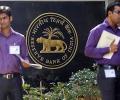
The Reserve Bank of India's retail direct scheme is off to a good start but the central bank itself sees it as an additional avenue and not an alternative to the existing one. Still, a reasonable expectation is to have at least 100,000 investors within a month of it being operational, and that could be well under way, if the latest trend is to sustain. The registration in the retail direct platform has crossed 35,000.

Buoyed by Sooryavanshi's success, the Hindi film industry is banking on 25-30 big movies lined up with a collective cost tag of Rs 2,000 crore.

'I hope the trend is sustainable and that economic activity accelerates going forward.'

The Reserve Bank of India (RBI) unions have decided to intensify their stir demanding revision of wages, pending since November 2017, and have called for mass casual leave of employees at the central bank on November 30. However, several sources in the RBI told Business Standard that the unions may not have to go on agitation, as the new contours of the wage pact have been almost finalised and could be announced any time. An email sent to the RBI was not answered. The United Forum of Reserve Bank Officers and Employees had deferred its agitation earlier after it was told that RBI Governor Shaktikanta Das was to hold talks with the human resource management department (HRMD).

Ola Electric is moving the delivery for the first batch of its electric scooters to between December 15 to the end of the month, a two- to four-week delay from its earlier schedule, due to a shortage of chipsets and electronic parts. The first batch of deliveries were scheduled for November 30 but the company decided to delay them after a meeting between its factory team and the global supply chain on Saturday. It became clear that the late delivery of chips and electronic parts was only 'getting worse', sources told Business Standard. Ola has apologised to customers for the delay and said it is "ramping up production as fast as we can so that you can get your Ola S1 at the earliest". It has stopped taking any new bookings until the chip shortage has eased, say sources.

As many as 2,000 chips are annually designed in India by semi-conductor and fabless companies, Intel India managing director Prakash Mallya said in a conversation with Business Standard. Mallya was reiterating the importance of India in the semi-conductor sweepstakes. "As much as 90 per cent of the semi-conductor companies have a design footprint in India.

Rapid strides in digital payments notwithstanding, the Indian economy will likely remain cash-dependent for many years to come, at least that's what the automated teller machine makers and cash logistics companies are betting on. After growing at over 20 per cent for most of 2020, currency in circulation growth fell to 8.5 per cent as of October 29 this year, shows data from the Reserve Bank of India (RBI). The reason for the steep rise in currency last year was the uncertainties related to the Coronavirus (Covid-19) pandemic, where people preferred to hoard cash to meet exigencies.

Prime Minister Narendra Modi will on Friday launch two schemes of the Reserve Bank of India (RBI) that may go a long way in changing how the household sector invests, and complains if anything goes wrong with their savings. These schemes - retail direct and an integrated ombudsman - will be launched by the Prime Minister virtually, in the presence of Finance Minister Nirmala Sitharaman. With the introduction of retail direct, a common man can directly take a position in government securities (G-Sec), considered to be the safest asset class a sovereign can offer.

'Rather than experimenting with CBDCs, we must come up with a very simple and straight design.' 'Dematerialise your currency/cash and with that dematerialised rupee allow all the transactions digitally.'
Leading microchip providers Qualcomm and Intel say the chip shortage might last anything between four months to a year, perhaps even two years, depending on the various product categories - mobile devices, ICE, electric vehicles, appliances, data centres. Prakash Mallya, MD, Intel India and vice president, sales and marketing and communications group, said the spike in demand was huge, and cut across segments from PCs, phones, appliances and auto leading to the shortage.

Social e-commerce platform Meesho is set to disrupt the food and grocery market by offering free home delivery on all orders in over 200 below Tier 1 cities in a year's time, in the first phase. It is also disrupting the monetization model by focusing primarily on advertising revenues rather than commissions from sellers, as distinct from its competitors. The move is expected to challenge the big players in the sector which include Jio Mart, Tata's Big Basket, Amazon, Grofers, and others, many of which have minimum prices for free delivery.
Nearly two million e-mandates for recurring payments have been registered with banks and card networks after the Reserve Bank of India (RBI) made it mandatory from October 1 to take prior consent of a customer before debiting her account, sources in know of the matter said. Industry estimates peg the recurring transactions at approximately 2.5 per cent of the total volume of transactions, and about 1.5 per cent in terms of value. Of these, around 75 per cent of domestic recurring transactions, and about 85 per cent international recurring payments are below Rs 5,000.


Indian Space Association (ISpA) chairman Jayant Patil has said that the executive council will debate whether it can include more telecom companies as founding members. The response came after some leading telcos said that they had been asked to be core members but preferred to be inducted as founding members. The key founders of the ISpA include the Bharti group through two companies (OneWeb and Airtel), L&T, Nelco, Walchandnagar, Alpha Designs and MapmyIndia.

Tata Group, which will now include Air India, Vistara, and Air Asia, has the highest market share of departures on the top 10 routes in the country. According to the data from Caladrius Aero Consulting, which tracked the departure data for eight airlines in August and September, Tata Group is ahead on all the top 10 routes ranked in accordance with the number of departures in August-September 2021. On the top 100 routes in terms of departures, Tata Group is ahead of its chief rival IndiGo on 30 of them.
 © 2026 Rediff.com - Advertise with us - Disclaimer - Privacy Policy - Sitemap - Feedback - About us - Terms of use - Grievances